Poison and hazards for dogs in New Zealand
The hazards that actually put dogs in New Zealand vet clinics, across the 1,915 walks we map: what they look like, when they turn up, and the two numbers to ring when it goes wrong. Nothing on this page sits behind a membership.
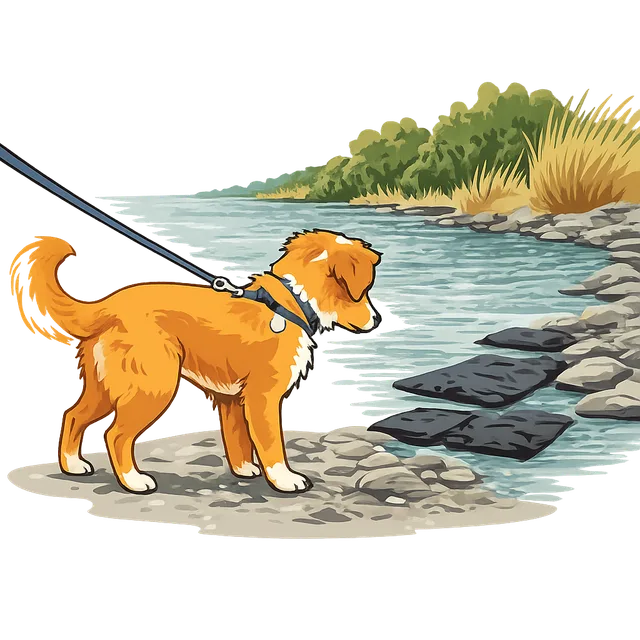
1080 blocks and bait stations: two different shadows
Two things get called poison out here and they behave nothing alike. Aerial 1080 is an event: a mapped block, published dates, signs at the entrances, then a caution period while carcasses break down. Ground bait stations are furniture, plastic boxes fixed to trees on reserves and covenanted land, "restocked all year, and what is inside varies: a second-generation anticoagulant such as brodifacoum, or 1080, diphacinone, cholecalciferol or cyanide paste. The sign on or near the station names the toxin, so read it rather than assuming.". Our birds evolved without land predators and something has to hold that line, so we take the tools as read. The shadow each one leaves is what concerns your dog.
Greater Wellington states plainly that dogs are extremely vulnerable to 1080, and that prevention is better than any treatment available for a poisoned dog. There is no antidote in your pack. DOC's poison group table gives the 1080 group a caution period of four months and the brodifacoum group three years. Those periods govern eating wild game rather than walking a dog, but they are the honest measure of how long a carcass stays loaded.
Brodifacoum takes more of it: Greater Wellington rates it low risk to dogs, with poisoning likely only from more than 250 g of bait straight out of a station, or several scavenged possum carcasses. The catch is timing. The signs are bleeding gums, blood in urine and faeces, vomiting and flatness, and they arrive days later.
Our map carries DOC's Pesticide Summary: laid, about to be laid, proposed. It cannot carry everything. The summary excludes rodent control in huts and buildings, cyanide paste for fur recovery and anything on land DOC does not administer, and three agencies (DOC, regional councils and OSPRI) run operations. "DOC's own line: local warning signs are the best indication of when pesticides are present."
Toxic algae: the mat on the river stones
Benthic cyanobacteria (Microcoleus, still widely called Phormidium) is the hazard most likely to kill a healthy young dog on a summer walk. In rivers it grows as dark brown or black mats on the stones, then peels off and washes up at the edges in drying wads that go leathery and pale. In lakes it behaves differently, suspended in the water column, turning the water murky or forming scums that LAWA describes as paint, petrol or pea soup. The river version is what kills dogs here, and it looks nothing like a bloom.
The draw is the smell. Drying mats give off a strong musty odour that dogs find attractive, so the animal that ignores the water goes straight for the wad on the bank. LAWA warns that even small amounts, the size of a 50 cent piece, can be seriously harmful.
Season and place: it builds through low flow, warm, settled summer weather, which is exactly when you want the river. Councils monitor mainly in the warmer months and publish warnings by river on LAWA. Read the warning before you go and keep the dog on lead at the water until you have looked at the stones yourself, because monitoring is periodic and an absence of a warning is not an all-clear. We tag 886 walks with swimmable water, and every one of them carries this caveat in summer.
Karaka: the January to April tree that keeps working all year
Karaka (Corynocarpus laevigatus) is a taonga: a handsome coastal tree, a serious kererū food, and a traditional food source for people once correctly prepared. "Dogs are the species it poisons most often in this country (Massey University's poisonous plants database), and it deserves knowing rather than resenting."
The orange fruit ripens and drops from January to April, which is why the New Zealand Veterinary Association encourages councils and landowners to sign affected areas across those months, and why vets see most cases then. Treat that window as peak risk, not the whole risk. The toxins are nitropropanoyl glucosides, karakin the best known of them, and they are most concentrated in the kernel inside the fruit. A fallen kernel stays toxic where it lies, so last season's fruit in the leaf litter can still poison a dog in September. Signage is a recommendation, not a legal requirement, so an unsigned park is not a cleared park.
Geography will not save you either. Most botanists accept karaka as naturally native only to the warmer northern North Island, but Māori planted it widely and it now self-seeds through much of the country, south to Banks Peninsula on the east coast and Ōkārito on the West Coast (NZPCN), with planted trees in parks and streets further south again. The thought "we are too far south for karaka" is not a safe assumption anywhere in New Zealand. Learn the leaf: big, thick, glossy, dark green.
Tutu, ongaonga, ngaio and tītoki: the natives worth knowing
The NZ Plant Conservation Network's poisonous natives list is short and specific: the Coriaria species, karaka, ngaio (Myoporum laetum), tītoki (Alectryon excelsus) and ongaonga. None of them is a problem to have around. All of them are worth recognising on a walk.
Ongaonga (tree nettle, Urtica ferox) is the one that can kill a dog inside an afternoon. Link the phrase to the species factsheet: NZPCN calls it one of New Zealand's most poisonous native plants, with stinging hairs up to 6 mm, and records cases of dogs and horses developing neurological problems with respiratory distress and convulsions within minutes of exposure, often dying within hours, although some recover. A young man died in 1961 after walking through a patch. It grows on riverbeds, forest margins and regenerating scrub, which is exactly the ground a loose dog crashes through, and it is a host plant for the red admiral butterfly, so the answer is to steer around it rather than clear it.
Tutu (Coriaria arborea) is described by NZPCN as the classic poisonous plant of New Zealand. All parts of all Coriaria species are poisonous except the fleshy black petals, seeds included, and the toxins tutin and hyenanchin are extremely potent. It is common along stream banks and through regenerating bush, so it sits right where dogs stop for water.
Ngaio and tītoki round out the list: both common in coastal and lowland planting, both on NZPCN's caution list. In practice the useful habit is the same for all of them. A dog that eats vegetation on walks needs watching in unfamiliar bush, and anything chewed and unidentified is a phone call to a vet, not an internet search.
What washes up: sea slugs, puffer fish and bluebottles
The grey side-gilled sea slug (Pleurobranchaea maculata) carries tetrodotoxin, the puffer fish neurotoxin. It was found to be toxic in 2009 after a cluster of dog illnesses and deaths on Auckland beaches, the first detection of the toxin in New Zealand and the first in any opisthobranch. "A cluster of dog illnesses and deaths was investigated across the winter of 2009 after beach access in the Auckland region, with vomiting, wobbliness and lethargy, and the toxin was confirmed in vomit and gut contents in two of the cases" (Toxicon, 2010). One slug can hold enough to kill at least four adults, and the eggs and larvae are toxic too. Tetrodotoxin paralyses muscle, including the diaphragm, which is why it stops breathing.
Two useful patterns. Timing: the slugs are seen most in winter and spring, and more than usual wash up on Auckland beaches at the end of winter, because they die after spawning and onshore winds bring them in (Auckland Museum). Geography: North Island populations are toxic in varying degrees and South Island specimens tested so far are not, which is a research finding, not an all-clear for southern beaches. Report sightings to your city or district council.
DOC's own dog guidance lists toxic algae, puffer fish, sea slugs and bluebottles washed ashore as things to keep dogs away from, and notes that swallowing too much sand or salt water in a long game of fetch is its own problem. The rule that covers all of it, without any need to identify a species at speed: the dog that hoovers the tideline is the dog that gets poisoned. After a big swell, lead on until you have had a look at what came in. More on windows and closures in beaches and seasons.
Grass seeds, matagouri and everything that sticks
From about November to April, dry grass seeds are the highest volume injury on this list. Barley grass, ryegrass, sword grass and yellow bristle grass shed barbed, arrow-shaped seeds built to travel one direction only, and NZ vets report they do not work their way back out (Vets North, Anexa). Paws are by far the most common landing site, ears and eyes close behind, then nose, armpits and groin. Left alone a seed migrates deeper, up a leg or into the chest, and often needs surgery to find. A dog licking the spot drives it further in.
The trap is the improvement. A small entry wound closes over while the seed keeps moving, the dog seems better, and a swelling or a draining tract appears somewhere else weeks later. So: check after every summer walk in long grass, toes and pads first, then ears, eyes, armpits and groin. Seeds still loose in the coat can be picked out. Anything embedded, or any sudden head-shaking, squinting or one-paw licking, is a vet visit today.
In the high country the hardware changes. Matagouri (tūmatakuru) carries spines up to 5 cm on flexible zig-zag twigs and is mostly South Island east of the main divide, avoiding high rainfall country. Speargrass or taramea sits at dog chest and eye height by design. Biddy-bid (hutiwai, piripiri) grows nationwide and its hooked burrs are engineered to attach. Scree cuts pads that boots protect on you. Carry a burr comb, blunt-tip scissors and vet wrap (see walking with your dog), and brush the dog out at the car rather than at home, so you are not moving seed between catchments.
Wasps in the beech: a genuine backcountry hazard
This one is not a nuisance, it is a density problem. DOC records that seasonally in some beech forests there are an estimated 12 nests, or 10,000 worker wasps, per hectare, which puts the combined body weight of wasps above the weight of all native birds, stoats and rodents put together. New Zealand has some of the highest German and common wasp densities in the world, because they have no natural predators here, winters are mild and honeydew is abundant. Colonies are about soccer ball sized and can get enormous if they overwinter, the largest recorded nest being 3.75 m tall at Waimauku near Auckland.
Where and when: honeydew beech forest, so Nelson Lakes, Buller and the top of the South Island in particular, worst in late summer and autumn when numbers peak and tempers are shortest. The dog risk is specific. Ground nests get dug at, flying things get snapped at, and stings inside the mouth or throat are the ones that close an airway. Wasp venom carries several toxins that can set off a hypersensitive or allergic reaction.
You will also start seeing Vespex bait stations in beech country, a fipronil protein bait used for landscape-scale wasp control in the warmer months. Same rule as any station: the dog does not get to investigate it.
When it goes wrong: two numbers and the right words
Save both before you need them. Your nearest after-hours or 24-hour vet, and the National Poisons Centre on 0800 POISON (0800 764 766), which runs 24/7 and can tell you what a substance is and what it does. The Poisons Centre is not a substitute for a vet. If a dog has eaten something, the vet is the call.
What changes the outcome is the specificity. Say the word: karaka berry, algal mat off the river stones, possum carcass in a 1080 block, bait out of a station, sea slug off the tideline. Note the time it happened. Photograph the plant, the mat, the carcass, the bait or the warning sign before you leave, because the sign names the toxin and different toxins get different treatment. Bring packaging or a sample if you have one. Do not induce vomiting or dose anything yourself: every source here says get to a vet, who will do it properly.
The honest picture on distance: we hold 28 after-hours and emergency clinics, verified on the operator's own site, and they do not cover 15 regions evenly. Auckland has many. At the time of writing the register carries no 24-hour clinic for Gisborne, Marlborough or the West Coast, which means the real answer in a lot of good walking country is a long drive to the nearest town with cover, then onward. Our drive estimates are straight-line distance with a road factor applied, not routed, so treat them as a floor rather than a promise, and read how we check for what that means. Ring ahead: several clinics triage by phone first.
| Clinic | Region | Phone | Hours |
|---|---|---|---|
| 111 Vet Clinic Kumeu | Auckland | 09 869 6111 | after-hours (nights+weekends) |
| Animal Emergency at VSA - Auckland West (Henderson) | Auckland | 09 849 2121 | after-hours (nights+weekends) |
| Animal Emergency at VSA - Sylvia Park | Auckland | 09 849 2121 | 24/7 |
| Animal Referral Centre Central (ARC Central) | Auckland | 09 281 5815 | 24/7 |
| Animal Referral Centre North (ARC North) | Auckland | 09 281 5815 | 24/7 |
| Evening Vet | Auckland | 09 217 9249 | extended |
| Manukau After Hours Veterinary Clinic (Night Vet) | Auckland | 09 277 8383 | after-hours (nights+weekends) |
| North Shore Veterinary Emergency & Critical Care | Auckland | 09 443 5640 | after-hours (nights+weekends) |
| Western After Hours Emergency Vet Clinic | Auckland | 09 820 7273 | after-hours (nights+weekends) |
| Bay After Hours Veterinary Hospital (BAHVET) | Bay of Plenty | 07 220 9775 | after-hours (nights+weekends) |
| Christchurch After Hours Veterinary Centre | Canterbury | 03 366 1052 | after-hours (nights+weekends) |
| HBAH - Hawke's Bay Urgent Care & After Hours Veterinary Clinic | Hawke's Bay | 06 651 7103 | after-hours (nights+weekends) |
| Massey University Pet Emergency Centre (Te Pokapū Ohotata) | Manawatū-Whanganui | 0800 738 363 | 24/7 |
| Nelson Vets - Saxton (after-hours on-call) | Nelson-Tasman | 03 544 5678 | after-hours (nights+weekends) |
| Nelson Vets - Victory (after-hours on-call) | Nelson-Tasman | 03 546 9646 | after-hours (nights+weekends) |
| Maunu Road Vet Clinic (Northland Veterinary Group) - 24/7 after-hours | Northland | 09 470 1060 | 24/7 |
| Dunedin Emergency & After-Hours Vet Clinic (DEVC) | Otago | 03 477 7233 | after-hours (nights+weekends) |
| Petfirst Aspiring (Wānaka) | Otago | 03 443 7262 | 24/7 emergency by phone |
| Petfirst Cromwell | Otago | 03 445 1229 | 24/7 emergency by phone |
| Remarkable Vets (Queenstown) - 24hr emergency | Otago | 03 442 1411 | 24/7 |
| Vetlife Cromwell | Otago | 03 445 0050 | 24/7 emergency by phone |
| Vetlife Wānaka | Otago | 03 443 6409 | 24/7 emergency by phone |
| Elles Road Veterinary Centre (Invercargill) - 24/7 after-hours | Southland | 03 214 4156 | 24/7 |
| Northern Southland Vets - Riversdale (24/7 emergency) | Southland | 03 202 5636 | 24/7 |
| Northern Southland Vets - Te Anau (24/7 emergency) | Southland | 03 249 7039 | 24/7 |
| A+ VET - Afterhours Plus Vet Emergency Taranaki | Taranaki | 06 242 1278 | after-hours (nights+weekends) |
| Waikato After Hours Veterinary Hospital (WAVH) | Waikato | 07 839 5656 | after-hours (nights+weekends) |
| Wellington After Hours Veterinary Clinic | Wellington | 04 473 7545 | after-hours (nights+weekends) |
The honest coverage picture, measured as the median drive from the walks we map: Nelson-Tasman about 5 minutes and Auckland about 5 minutes, but Gisborne about 220 minutes, West Coast about 165 minutes, Waikato about 70 minutes. On the long-drive coasts, carry the first-aid kit and the beacon, because the clinic is not coming to you.